Local detail
The Cost of This Job
What you pay depends mostly on what's actually failing, and in a town where most houses went up between 1951 and 1985 - median year 1972 - a lot of what's failing is original equipment. A torsion spring sized for a door built in that era isn't always a stock item anymore. Same with some of the drum and cable hardware from that period; a few jobs need a part sourced rather than pulled off the truck, and that adds a day or two, not because we're slow but because the part isn't common.
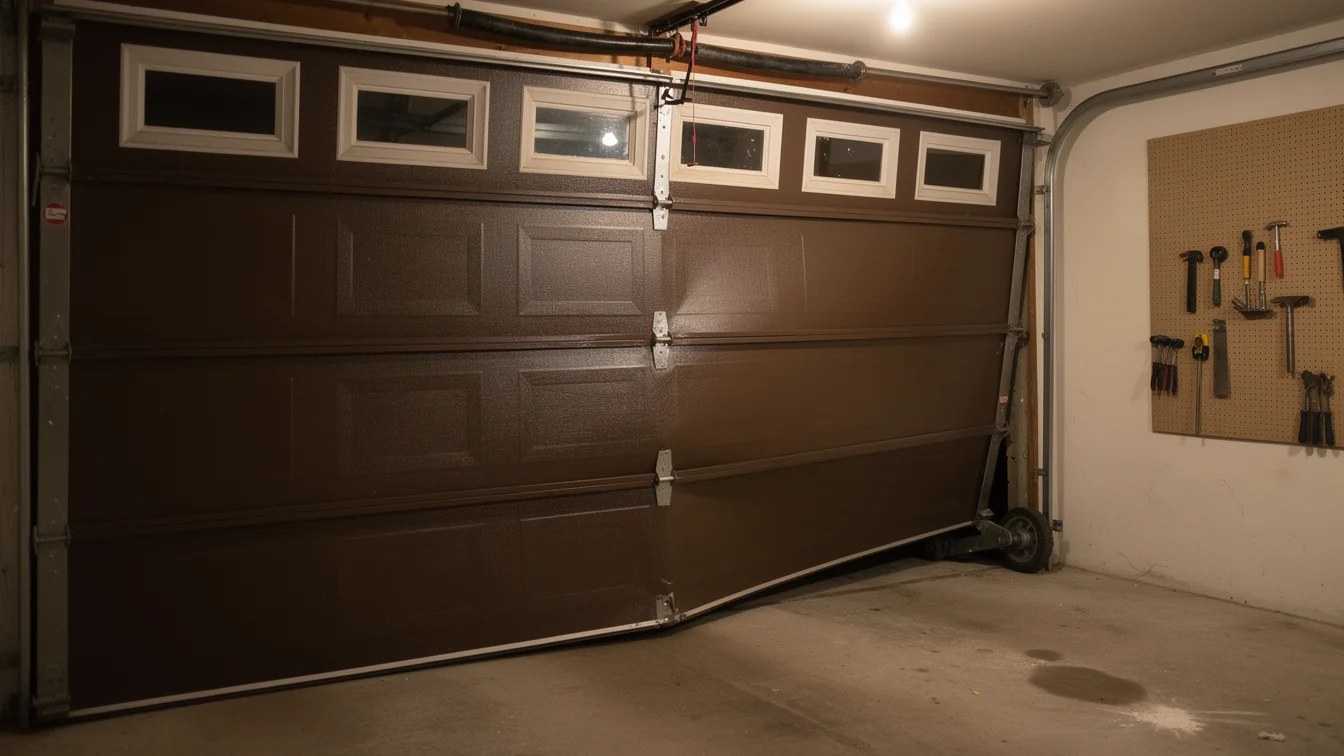
With 33,212 owner-occupied houses across this area and a median household income around $128,163, we see a real split: some owners want the cheapest fix that gets the door moving again, others want it replaced once they learn the springs, rollers, and track are all original. Neither call is wrong. What we won't do is quote a flat number over the phone for a door we haven't seen - a bent track and a seized spring look the same from the kitchen, but they're not close in price. That's the one thing we can't shortcut.
The area
What the Weather Here Does to It
This is a mild temperate climate band - no hard freezes, no summer stretches hot enough to warp a steel panel. That actually works against easy diagnosis. In a harsher climate, a noisy door gets blamed on the weather and the owner waits it out. Here, there's no seasonal excuse. If a door that ran quiet all year suddenly starts grinding or thumping, the weather isn't the reason. Something mechanical has worn out or let go.
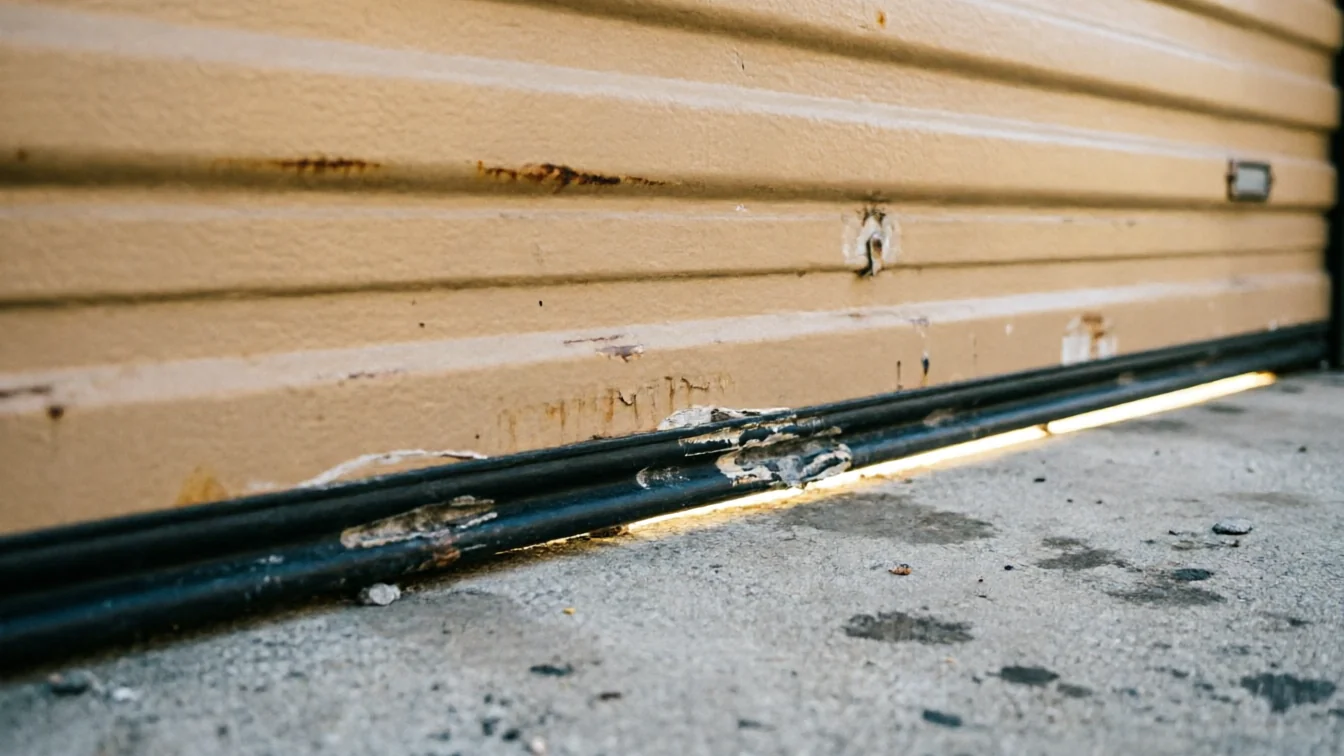
That matters because it means the noises you hear are almost always age and wear, not a cold snap tightening a spring or heat swelling a panel. A door built in the 1960s or '70s that's starting to complain now is doing it on its own schedule, not the thermometer's. We don't get the dramatic weather-triggered failures some regions do - ice-locked tracks, heat-expanded panels jamming in their frames. What we get instead is slow, steady wear on hardware that's been doing its job quietly for decades, until it isn't quiet anymore.
What we find
The Problem
A grinding sound on the way up usually means a roller - steel or nylon, depending on when it was last replaced - that's worn its bearing out and is now riding metal-on-metal against the track. A sharp pop, usually once, usually loud, is a different animal: that's a torsion spring losing tension or a cable catching on a worn drum. Neither gets better by itself.
A rhythmic thump that matches the door's travel is often a bent track section or a panel hinge that's finally given up after years of flexing. A high screech, especially at the top of the travel, points to the opener's drive mechanism rather than the door itself.
Across the 25 named areas in this service area, most of that housing stock dates to the 1960s and '70s, which means a lot of these doors are running original or near-original hardware. The noise isn't random - it's a part telling you it's near the end of its working life. The door that's silent one week and grinding the next hasn't changed. The part that was already worn finally crossed the line.
How we work
What to Check
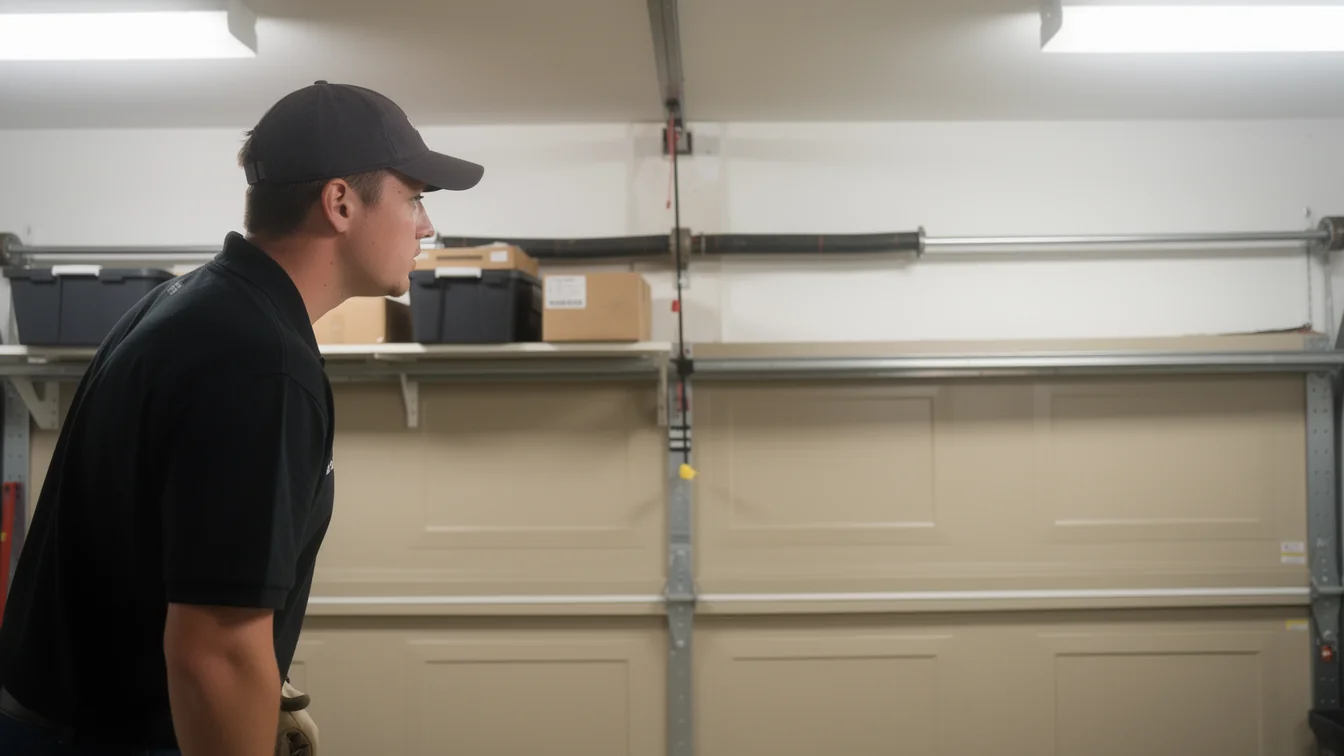
Before you call anyone, stand next to the door and run it through one full cycle, listening rather than watching. A grinding noise that moves with the door, not just at the top or bottom, points to a roller. Check whether it's metal or nylon - nylon wears quieter but fails without much warning.
Look at the springs above the door. If one looks stretched differently than the other, or there's a visible gap in the coil, stop using the opener and don't try to force it - a loaded spring under tension isn't something to adjust yourself.
Check the cables at the bottom corners for fraying strands, and run a hand (carefully) along the track for anything that's visibly bent rather than straight. A door built in the 1972 range - the median year of construction around here - is old enough that any of these parts could be original. None of this tells you exactly what's wrong, but it tells you which noise category you're dealing with before you make the call, which saves time on both ends.
Talk to a local pro
Garage door trouble in Santa Cruz?
Same-day service with honest, upfront quotes.